
We are celebrating our 10th Anniversary and few foods are more festive than warm, comforting fondue. This holiday cheese fondue recipe is great for entertaining at Christmas, New Year’s Eve, or any time it’s cold outside and you’re craving luscious molten cheese. (If you love melted cheese but don’t have the special equipment, check out our easy raclette dinner recipe.)
All you need are the right cheeses and some special equipment to make and serve cheese fondue for your holiday celebration. Here’s how to make it happen.
Where Is Cheese Fondue From?

Fondue originated in Switzerland in the eighteenth century as a way to use stale bread and cheese.
Firm Alpine cheeses made in the region were grated and melted over a low flame. Alcohol—traditionally white wine—was mixed in to add flavor and help keep the cheese smooth and melted without burning. Once the cheese was luscious and molten, crusts of bread were dunked in and eaten, made much tastier when dipped in the mixture.
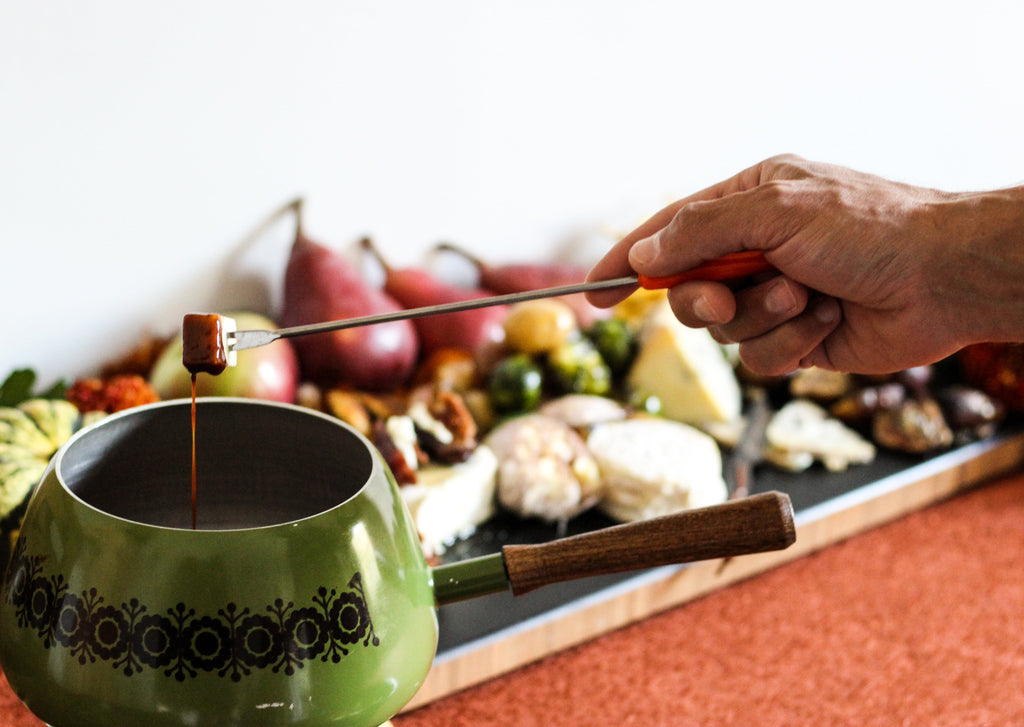
Fondue grew in popularity in the 1930s, when it was promoted by the Swiss Cheese Union as a national dish of Switzerland. The group later marketed fondue in America in the 1960s and 1970s—which is why you’ve seen so many fondue pots at thrift stores and vintage shops in bright, trippy colors.
While the original fondue is made with cheese, other foods have been melted or cooked in a communal heated vessel in the style of fondue since the mid-20th century. Chocolate may be melted to create dessert fondue served with bread, fruit, and other sweets, while vegetables, meat, and seafood may be cooked in boiling hot broth or oil.
What Are the Best Cheeses for Fondue?

Alpine cheeses are classic for cheese fondue—after all, they’re the signature style of Switzerland.
Gruyère is the standard go-to, with a combination of flavor and meltability, but other Swiss cheeses like Emmental or Appenzeller (or a combination) may be used instead. A common approach is to blend a firmer, more flavorful aged cheese with a younger, milder cheese with better meltability
While Alpine wheels are traditional, you can make fondue with other types of firm cheese that melt well. Sharp and mild cheddar or young and aged Gouda are nontraditional combinations to try. Other cheeses that melt well are fontina, raclette, Colby, Monterey Jack, and pepper Jack.
Enter... our Special Holiday Release Fondue Box Celebrating our 10th Anniversary!
Your box includes one pound of Matterhorn Alpine Cheddar, three-quarter pound of Roth Grand Cru Reserve, and one pound of American Artisan Raclette. Three Alpine-style cheeses with beautiful melting character, nutty, savory, and made for the pot. Semifreddi's Super Garlic Crostini are your dippers, sturdy and buttery with a garlic punch. Small Good's Spicebush Salami adds savory richness and herbaceousness alongside. And Three Little Pigs Cornichons bring the sharp little crunch that cuts through all that melted goodness, exactly as they do in the Alps.
How Much Cheese Per Person for Fondue?
Plan to purchase around eight ounces of cheese per person when serving fondue. An intimate date night meal for two would require about a pound of cheese, while a meal for four would require two pounds, a dinner party with eight guests would need four pounds, and so on.
If you have leftover cheese, store it well and enjoy it on a future cheese board. If you end up with extra fondue in the pot once everyone’s had their fill, save it to re-melt and enjoy on toast or over potatoes the next day.
Which Fondue Pot Is the Best?

Yes, you need special equipment to make fondue. But the result is totally worth it.
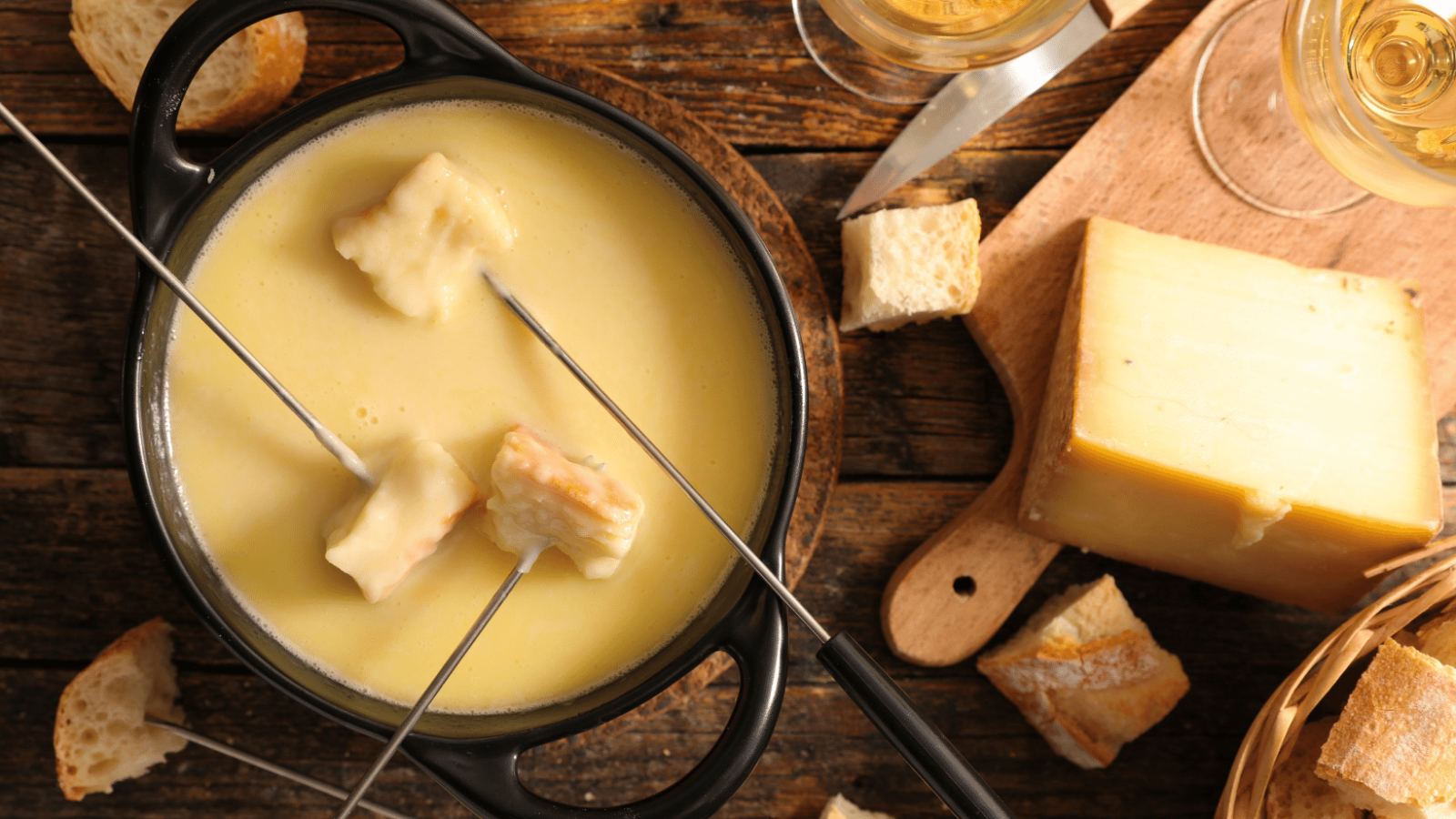
A classic fondue set includes a pot to hold the cheese, a tabletop stand, a burner or candle, and a set of long-handled forks.
Ceramic pots are the most traditional, but enameled cast iron pots also hold heat well without burning the cheese, as do copper-coated pots. Stainless steel pots will also work, provided they have a heavy bottom. Look for a pot with sturdy construction, a heavy bottom, and easy-to-grip handles. (Sadly, those vintage aluminum fondue pots aren’t great at holding heat.)
Fondue is typically heated in the pot on the stove, then moved to a candle or burner with solid fuel, such as a Sterno. Some burners use liquid fuel or even butane to keep the cheese warm and melted at your table. Other fondue pots are electric, meaning the heat is easily adjustable. However, electric fondue pots must be plugged in, which can pose a difficulty depending on how your dining space is set up.
Fondue pots come in a range of sizes, from tiny two-person models to punch bowl-sized vessels for big parties. A pot in the one-to-two-quart range that comes with between four and eight forks should work well for most people.
What Do You Serve With Fondue?

In addition to cheese and a fondue set, you'll need tasty accompaniments to dip. Our Fondue Box comes with three that cover the bases.
Dippers: Semifreddi's Super Garlic Crostini. Sturdy, crunchy, and loaded with garlic, these crostini hold up to a bubbling pot without going soggy or breaking off in the cheese. They're a modern take on the classic bread cube, with plenty of flavor of their own. If you want to add more dippers, tart apples, pears, lightly steamed vegetables, roasted potatoes, and even less traditional options like meatballs, crispy bacon, soft pretzels, and potato chips are all delicious when dunked.
Something cured: Spicebush Salami. Fondue is rich, and a little spice helps balance it out. Spicebush's savory, aromatic flavor is a natural partner for melted cheese. Spear a slice and give it a swirl, or enjoy a slice on the side between dips.
Something bright: Three Pigs Cornichons. Not everything on the table needs to go in the pot. Tangy, crunchy cornichons cut through the richness of the cheese and reset your palate between bites. It's a classic fondue pairing for good reason. Add some grapes, berries, or a simple green salad dressed in a zippy vinaigrette for more freshness.
What to Drink
Traditional pairings
- Dry white wine: Crisp, high-acid whites like Sauvignon Blanc, Riesling, or Alpine-style whites are the classic choice, and they cut through the cheese beautifully.
- Dry sparkling wine: The bubbles refresh your palate, making Champagne, Crémant, or Prosecco a great match for the garlicky crostini.
- Kirsch: A small sip of this cherry brandy is the traditional Swiss way to finish a fondue.
- Hot black tea: Another time-honored Alpine option that's said to aid digestion after a rich meal.
Non-traditional pairings
- Lager or pilsner: Clean, crisp beers refresh the palate and play well with spicy salami and tangy pickles.
- Hard cider: Its apple-forward brightness and light sweetness complement the cheese and the cornichons.
- Light, chilled red wine: A low-tannin red like Gamay or Pinot Noir stands up to the salami without overpowering the cheese.
- Sparkling water with citrus or ginger beer: A zesty, non-alcoholic option that keeps things lively.
How to Make Fondue

You’ve gotten your fondue pot, your cheese and other ingredients, and your accompaniments. It’s time to make fondue!
Get your prep out of the way earlier in the day. Prepare any accompaniments and grate your cheeses the morning or afternoon of your gathering, then store everything in an airtight container in the fridge until it's time to melt.
When you’re ready to melt, toss the grated cheese with cornstarch and rub a cut garlic clove on the inside of your fondue pot. Put the pot on the stove over medium-low heat (except for electric fondue pots, which don’t go on the stove—follow the manufacturer’s instructions for heating the cheese).
Add the cheese mixture and the alcohol to the pot, stirring for a few minutes as the cheese melts. Once it’s melted, light the burner on your fondue pot, turn off the stove, and move the pot to its stand over the burner. Grab your forks, spear some goodies, and dip in!
Made this recipe? Tag us @cheesegrotto on Instagram, Facebook, and Twitter and let us know!

Leave a comment